
Employee Monitoring Software vs Traditional Attendance Systems: Which One Actually Works in 2025?
Employee Monitoring Software vs Traditional Attendance Systems: Which One Actually Works in 2025?
As we step into 2025, the debate between employee monitoring software and traditional attendance systems continues to gain momentum. Recent statistics show that 96% of companies now use some form of time-tracking software, with forecasts predicting that 70% of large organizations will have deployed employee monitoring tools by year-end. This shift highlights the growing demand for more sophisticated ways to manage workforce accountability and productivity.
In this guide, we will explore the differences between employee monitoring software and traditional attendance systems. We’ll examine their use cases, features, pricing models, and why modern solutions like TrackForce are becoming increasingly popular among businesses aiming for efficient workforce management.
What Are Employee Monitoring Software and Traditional Attendance Systems?
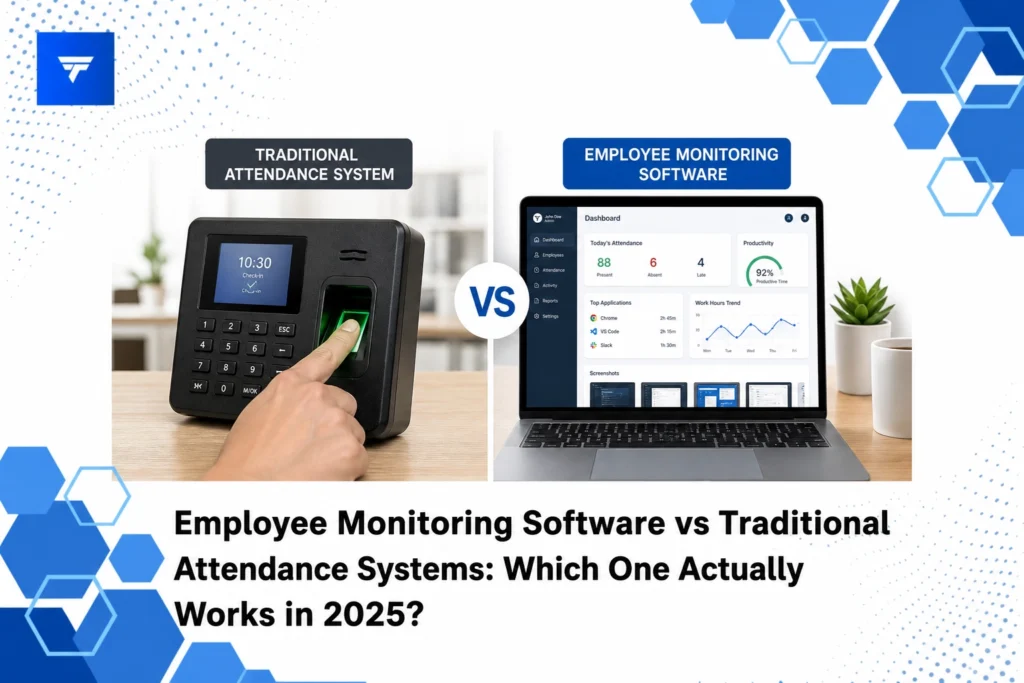
Employee monitoring software is designed to provide businesses with real-time insights into employee productivity, security, and workflow. These tools often include features like app and website tracking, email monitoring, and behavioral analytics. They are popular among operations managers, HR teams, and IT directors who need to ensure productivity and compliance, especially for remote and hybrid teams.
Traditional attendance systems, on the other hand, focus on tracking when employees clock in and out of work, usually through methods like punch cards or biometric systems. While they are useful for basic attendance tracking, they lack the broader insights and capabilities offered by modern software solutions.
This section will set the stage for a deeper comparison of the two, addressing who they are for and the limitations and benefits of each approach.
Employee Monitoring Software: Key Tools and Use Cases
1. Real-Time Dashboard
The real-time dashboard is pivotal for operations managers who need an overview of their team’s productivity and workflow. This tool provides live tracking and productivity graphs, offering instant insights into employee activities. It’s ideal for managers overseeing remote teams who require real-time visibility to make quick decisions and enhance team performance.
2. App & Website Tracking
App and website tracking is essential for businesses focused on security and productivity. This feature monitors which applications and sites employees access during work hours. IT directors can use this data to ensure compliance and prevent unauthorized access, making it a crucial tool for organizations with strict security protocols.
Traditional Attendance Systems: Core Characteristics
3. Punch Card Systems
Punch card systems have been a long-standing solution for businesses needing straightforward attendance tracking. They are suited for smaller companies or environments where digital solutions may not be viable due to technical constraints. While reliable, they offer limited features beyond tracking in and out times.
4. Biometric Systems
Biometric systems, such as fingerprint or retina scanners, offer a more secure alternative to punch cards. They are favored by companies requiring higher security levels, where fraud prevention in attendance is critical. Despite security advantages, they still fall short in providing comprehensive productivity insights.
Types and Features of Modern Solutions like TrackForce
Modern employee monitoring tools, such as TrackForce, are a convergence of several advanced features designed to offer comprehensive oversight. These solutions typically include smart behavior analytics that detect risky activities and performance gaps, ensuring not only productivity but also security.
Other features encompass customizable monitoring rules, empowering businesses to decide what to track and who to include, aligning the tool’s capabilities with company policies and compliance requirements. With role-based access, organizations can safeguard sensitive information through enterprise-grade encryption.
Pricing Models: Understanding Costs and Value
Employee monitoring software often operates under tiered pricing models. Take TrackForce as an example: they offer diverse plans to fit different business needs. The Essential plan, at $4.99 per user per month, covers core features like dashboard access and daily productivity reports.
For more comprehensive needs, the Professional plan at $9.99 includes additional capabilities such as file transfer monitoring and screen recording. Their Ultimate plan, priced at $12.99, provides advanced risk analytics and custom policy restrictions, appealing to organizations demanding extensive security and analytical functionalities.
Why It Matters: The Shift to Employee Monitoring Solutions
The transition to employee monitoring software is not a transient trend but a reflection of current market needs. With remote work becoming normalized, the visibility such tools provide is invaluable. Beyond tracking hours, these solutions analyze work habits and security threats in real-time.
For companies facing challenges like idle time and data security risks, modern monitoring solutions offer a structured approach to workforce management. TrackForce‘s comprehensive features empower businesses with the ability to streamline operations while maintaining stringent security measures.
Additionally, the ability to customize monitoring rules and roles means that solutions can be tailored to distinct operational needs, accommodating everything from small startups to expansive corporations with complex hierarchies.
How It Works: Implementing Employee Monitoring Software
Setting up employee monitoring software is a streamlined process. With TrackForce, onboarding is simplified with intuitive user interfaces and guided setup steps. Companies can swiftly integrate these solutions into their existing workflow, minimizing downtime.
The workflow generally involves installing monitoring agents on employee systems, which gather necessary data, allowing managers to analyze productivity patterns, discover inefficiencies, and enforce compliance policies efficiently.
Moreover, companies can configure alerts and reports tailored to specific metrics, ensuring that relevant insights are always accessible, contributing to informed decision-making processes that drive business goals.
Conclusion
Choosing between employee monitoring software and traditional attendance systems depends on your organization’s needs. For those looking to gain a comprehensive understanding and control over workforce activities, TrackForce offers an unparalleled solution, combining advanced analytics, security, and productivity tracking.
FAQs
What is the main advantage of using employee monitoring software over traditional systems?
Employee monitoring software provides comprehensive insights into employee activities beyond mere attendance. This includes productivity tracking, security monitoring, and performance analysis, offering a holistic view of workforce management. In contrast, traditional systems are limited to recording in-and-out times without further analytics.
Can employee monitoring software be customized to fit specific company policies?
Yes, tools like TrackForce offer customizable monitoring rules that allow companies to define what activities to track. This flexibility ensures that businesses can adapt the software to align with their operational policies and compliance requirements, providing tailored monitoring solutions.
How does TrackForce ensure data security with its monitoring tools?
TrackForce ensures data security through role-based access controls and enterprise-grade encryption. These features protect sensitive information by restricting access based on organizational roles and securing data transmission, thus maintaining high security standards across all monitored activities.
Who can benefit most from implementing employee monitoring software?
Operations managers, HR teams, and IT directors of organizations with remote or hybrid teams will benefit significantly from employee monitoring software. These tools provide crucial insights into productivity and security, aiding in effectively managing workforce operations and enhancing overall efficiency.
