Apploye Alternatives: TrackForce vs
Apploye in 9 Areas
2026-10-17
•
Author: TrackForce Team
•
~1 min read
•
Updated October 17, 2026
- TrackForce vs Apploye: The Short Answer
- 1. Product Philosophy: Tracking Work or Interpreting Performance
- 2. Time Tracking and Timesheets
- 3. Screenshots, Apps and Website Visibility
- 4. Workforce Analytics and Performance Trends
- 5. Projects, Tasks, Payroll and Client Billing
- 6. Performance Reviews and Coaching
- 7. Privacy, Transparency and Employee Trust
- 8. Pricing and Total Cost
- 9. Which Platform Fits Your Team?
- Final Verdict: TrackForce vs Apploye
- Frequently Asked Questions
- —What are the best Apploye alternatives?
- —Is TrackForce an Apploye competitor?
- —Can activity data be used for performance reviews?
- —How should I compare Apploye competitors?
- Editorial Verification Notes
- Rank Math Checklist
If you are researching Apploye alternatives, the important question is not which platform collects more data. It is what management decision you want that data to support.
Apploye presents itself as employee time tracking and monitoring software. Its official feature set includes time tracking, timesheets, screenshots, application and URL tracking, projects, client invoicing and payroll calculation. TrackForce puts more emphasis on productivity trends, workflow context and evidence-backed reviews.
Apploye is a practical fit when verified hours, screenshots, timesheets and client billing sit at the centre of the workflow. TrackForce deserves closer consideration when managers want to turn work activity into longer-term performance evidence.
This guide compares TrackForce and Apploye in nine buying areas.
TrackForce vs Apploye: The Short Answer
Choose Apploye when your primary need is structured time tracking with screenshots, timesheets, project budgets, payroll calculation and client invoicing in one platform.
Choose TrackForce when your priority is understanding productivity patterns, workload, workflow and performance over time, especially when that evidence needs to support reviews and coaching.
The right option depends on whether your problem begins with hours and proof of work or with performance interpretation.
| Buying question | TrackForce | Apploye |
| Main product emphasis | Productivity, workflow visibility and performance evidence | Time tracking, monitoring and workforce administration |
| Time and activity data | Automatic time, application and activity visibility | Timer, timesheets, idle detection and activity analytics |
| Screenshots | Supports employee activity visibility | Screenshot monitoring with plan-based frequency |
| Performance reviews | Evidence and trends can support ratings and coaching | Reports can inform reviews, but formal evidence-backed review positioning is not the main emphasis |
| Projects and billing | Confirm requirements during a demo | Projects, tasks, budgets, clients, invoices and pay-rate calculation are listed features |
| Field workforce fit | Confirm mobile and location requirements | Apploye states that it does not offer GPS tracking or geofencing |
| Privacy approach | Custom measurement controls and shared employee data views | Transparent or optional monitoring settings, with advanced deployment and compliance options on selected plans |
| Pricing | Check the current TrackForce pricing page or request a quote | Free Starter plan and paid per-user plans are publicly listed |
| Best fit | Teams connecting daily work evidence to performance decisions | Teams needing verified time, screenshots and billing administration |
Feature and pricing information was reviewed on 17 October 2026. Vendor capabilities and plan limits can change, so confirm critical requirements before purchase.
1. Product Philosophy: Tracking Work or Interpreting Performance
Apploye starts with time and monitoring. Its official feature and pricing pages group together time tracking, attendance, screenshots, app and URL usage, productivity levels, reports, projects, payroll and invoicing. This creates a broad operating toolkit for teams that need to verify work and administer time-based processes.
TrackForce starts with a different question: what does daily work data reveal about productivity, workload and performance over time? Its employee performance management software connects automatic time and activity records with trends, workflow allocation, consistency signals and evidence attached to reviews.
The distinction matters. A record tells a manager what happened. A trend helps the manager decide whether performance is improving or whether a workflow is creating delays.
2. Time Tracking and Timesheets
Apploye has a mature timekeeping structure. According to its official pricing comparison, plans can include multi-platform timers, timesheets, approvals, idle-time detection, manual time, exports and billable or non-billable hours.
TrackForce records time and activity automatically and presents it as part of a wider performance record. This can reduce manual timesheet chasing and help managers examine patterns across weeks or months.
If approved timesheets are the centre of payroll and client billing, test Apploye first. If time is mainly one input into performance, workload and workflow analysis, TrackForce may offer the more relevant frame.
3. Screenshots, Apps and Website Visibility
Both products give managers visibility into digital work. Apploye publicly documents screenshot monitoring, application usage, URL tracking, activity levels and optional screen recording. Screenshot frequency and access to some monitoring features vary by plan or add-on.
TrackForce lists application tracking, website insights, activity records and real-time dashboard visibility. It positions these signals as context for productivity and operational decisions, not as a complete measure of employee value.
That qualification is important when assessing Apploye competitors. Active time and screenshots can help investigate a process. They cannot independently measure quality, judgment, customer impact or completed outcomes.
For a deeper explanation, read workforce analytics vs employee monitoring.
4. Workforce Analytics and Performance Trends
Apploye provides dashboards, activity analytics, reports and productivity data. Buyers can use those reports to understand attendance, tracked time and computer activity.
TrackForce goes further in how it frames the next management step. Its platform describes productivity trend analysis, workflow and time-allocation insights, workload balance, consistency signals and behaviour-based insights across a period. This is especially useful when a manager must explain why a performance rating was given.
For teams comparing Apploye alternatives for performance management, ask each vendor to demonstrate a real six-month review. Can the product show change over time, and can the employee see the same evidence? A dashboard is only valuable when it supports a defensible decision.
5. Projects, Tasks, Payroll and Client Billing
Apploye has the clearer publicly documented package for time-based administration. Its current plans list projects, unlimited tasks, project budgets, clients, invoices, pay rates, bill rates and payroll history. Its own product information clarifies that payroll is calculated from tracked time rather than disbursed by the platform.
TrackForce buyers should bring an exact workflow to the demonstration. Ask how projects, assignments, rates, approvals, exports and finance-system integrations work in the current plan. Do not assume that two products use the word “project” in the same way.
Apploye has an advantage when built-in time billing is non-negotiable. TrackForce has a stronger case when the objective is to connect operational evidence to performance conversations.
6. Performance Reviews and Coaching
This is where the two approaches separate most clearly.
Apploye reports can supply evidence for a review, but its public product structure is primarily organised around tracking, monitoring and workforce administration. TrackForce explicitly positions its platform between monitoring tools and traditional HR review systems. It converts daily work signals into period-level trends and makes those trends visible during the review process.
Managers should combine activity evidence with output, quality, timeliness and business impact. TrackForce's guide to employee performance metrics explains why a single activity score should never become the final rating.
If your current reviews rely on recent memory, subjective impressions or self-reported forms, TrackForce is the more distinctive option among Apploye alternatives.
7. Privacy, Transparency and Employee Trust
Monitoring capability does not automatically determine whether a system is fair. Configuration, notice, access, retention and management behaviour matter just as much.
Apploye says tracking in its interactive desktop app runs when the employee starts the timer. It also lists enterprise compliance and deployment options. Buyers should confirm which privacy and security capabilities are included in their plan.
TrackForce describes custom measurement controls and employee access to their own productivity trends. That shared view can make data more useful for coaching because the employee and manager begin with the same record.
Whichever product you choose, document the purpose of each data point, collect only what is necessary, limit access and provide a correction process. The practical framework in how to measure employee productivity without micromanaging can help teams set that boundary.
8. Pricing and Total Cost
Apploye publishes a permanent free Starter plan for up to ten users and paid Elite, Power and Enterprise plans. At the review date, annual paid pricing started at $4.50 per user per month, while monitoring frequency, API access, screen recording, white labelling and on-premise deployment varied by plan or add-on. Review the live pricing page because promotional prices and plan limits can change.
TrackForce offers a 30-day trial with no credit card according to its current performance management page. Its pricing page should be checked for the latest commercial terms.
9. Which Platform Fits Your Team?
Apploye may be the better fit if:
- Approved timesheets are central to payroll or client invoicing.
- You want screenshots, app usage and URL tracking with clearly published plan limits.
- Projects, tasks, budgets, clients and pay-rate calculations should live together.
- A free plan for a small team is important.
TrackForce may be the better fit if:
- Managers need productivity and workflow trends, not only proof of activity.
- Performance reviews should include evidence from the full review period.
- Workload, consistency and time allocation need to inform coaching.
- Employees should see the same trend data used by managers.
- You want to move from monitoring events toward performance decisions.
To see TrackForce alongside a broader shortlist, review the complete Apploye alternatives buyer page. During any trial, use a real problem, publish a clear measurement policy and judge whether the product improves a billing, staffing, workflow or performance decision.
Final Verdict: TrackForce vs Apploye
Among Apploye alternatives, TrackForce is not simply another time tracker with a different interface. The stronger reason to consider it is its attempt to connect daily work evidence with productivity trends, workflow decisions and performance reviews.
Apploye remains a credible option for teams that need detailed time tracking, screenshots, timesheets, project administration, payroll calculation and client invoicing. Its public pricing also makes early cost comparison straightforward.
The decision comes down to the outcome you need. Choose Apploye when tracked hours and time-based administration define the workflow. Choose TrackForce when managers need to understand performance across time and support a fairer, evidence-based conversation.
Frequently Asked Questions
What are the best Apploye alternatives?
The best Apploye alternatives depend on the requirement. TrackForce is a strong option for workforce analytics and evidence-backed performance management. Buyers focused on billing, timesheets or field work should compare products against those specific workflows rather than choose from a generic ranking.
Is TrackForce an Apploye competitor?
Yes. Both platforms provide employee activity and productivity visibility. However, they differ in emphasis. Apploye centres on time tracking, monitoring and time-based administration, while TrackForce places more emphasis on productivity trends, workflow context and performance evidence.
Can activity data be used for performance reviews?
It can provide context, but it should not become the complete rating. Fair reviews also consider output, quality, timeliness, role expectations, workload and business impact. Employees should be able to see and challenge the evidence used.
How should I compare Apploye competitors?
Compare Apploye competitors with a real workflow, a written privacy policy and a defined success measure. Test whether each platform improves a decision about billing, staffing, workflow or performance instead of simply producing more data.
Editorial Verification Notes
- TrackForce product and performance claims were checked against its homepage, pricing page and employee performance management page on 17 October 2026.
- Apploye feature, limitation and pricing claims were checked against its official features, pricing and product-information pages on 17 October 2026.
- Confirm live pricing and plan limits immediately before publication.
- The intended money page https://trackforce.io/apploye-alternatives was not accessible to the verification crawler. Confirm that it returns HTTP 200 before publishing this post. If it is not live, link to the TrackForce homepage temporarily and update the link after launch.
Rank Math Checklist
- Focus keyword begins the SEO title and H1.
- Focus keyword is present in the slug, meta description, introduction, subheadings, body, FAQ and hero-image alt text.
- Article includes a number in the title.
- Article includes internal links to the money page, employee performance page and three related blog posts.
- Article includes external links to official Apploye sources.
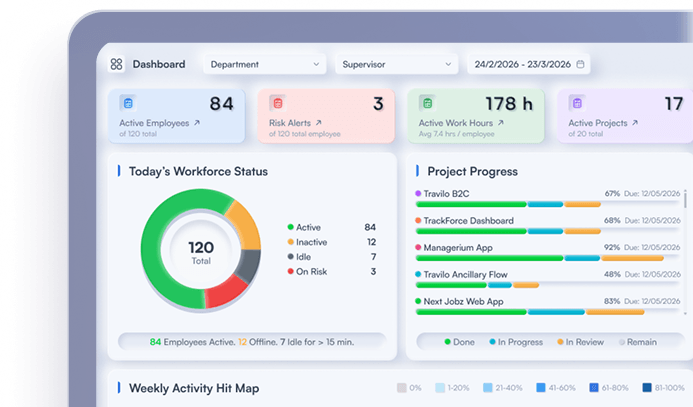
- The hero image should be uploaded with the supplied alt text.
- Set the focus keyword exactly as apploye alternatives.
- Add Article and FAQ schema in Rank Math after publication details are final.
Similar blog you can explore
How to Write a Performance Review: 8 Proven Steps
Employee Monitoring South Africa: 9 Essential POPIA and RICA Rules
Employee Monitoring Law UK: 10 Essential ICO Rules for 2026
Start Your 30-Day
Free TrackForce Trial