
Hidden App vs Login-Based Monitoring: Which Employee Tracking Mode Is Right for Your Team?
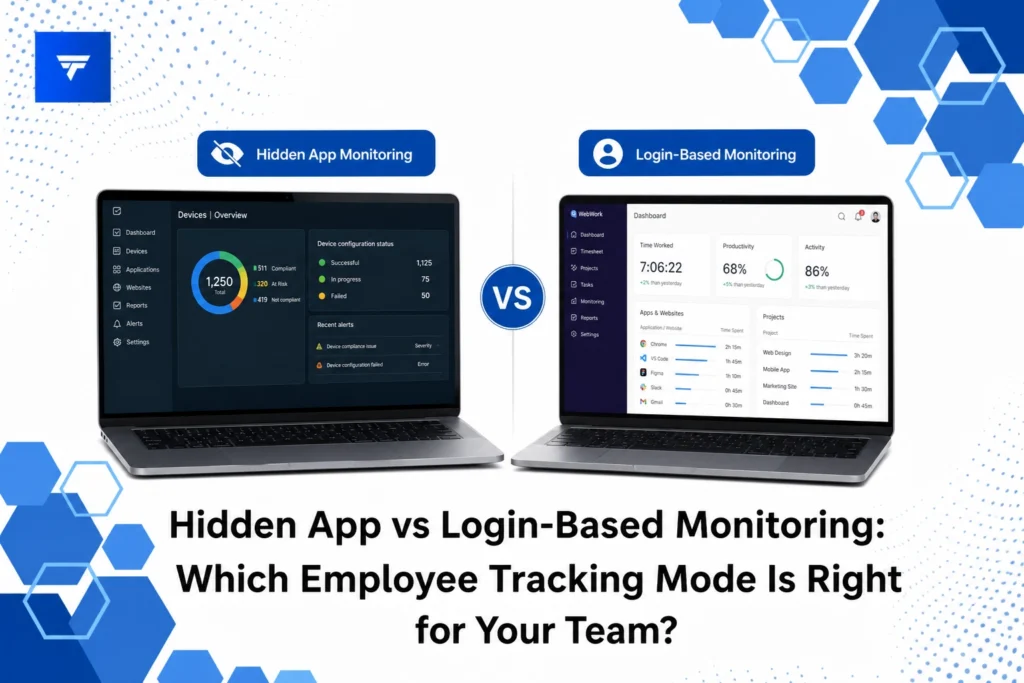
Hidden App vs Login-Based Monitoring: Which Employee Tracking Mode Is Right for Your Team?
Introduction
Employee monitoring has become a critical component of workplace management. A recent study by Gartner highlighted that 60% of large organizations are utilizing remote tracking software to enhance visibility into remote work. This surge in adoption reflects the increasing reliance on employee monitoring to ensure productivity and data security.
The choice between hidden app monitoring and login-based tracking methods poses a dilemma for managers. While hidden monitoring operates discreetly without disrupting employee routines, login-based tracking requires user initiation. Deciding which method aligns best with your organizational goals and culture is a pivotal step.
In this article, we will explore the nuances of both hidden app monitoring and login-based tracking. You’ll learn about their applications, benefits, and considerations to help make an informed decision for your team.
What Is Hidden vs Login-Based Monitoring?
Hidden app monitoring involves software that operates quietly in the background. Employees are often unaware it’s installed, allowing managers to observe activities without any behavioral changes. This method is beneficial when protecting against insider threats or ensuring compliance with minimal disruption.
On the other hand, login-based monitoring requires employees to actively log into a system that tracks their activities. This method is frequently transparent, promoting an environment of trust and accountability. It’s suited for organizations focused on productivity while maintaining employee autonomy in their workspaces.
The choice between these monitoring methods largely depends on organizational needs, the nature of work, and company culture. Transparency fosters trust, but covert monitoring can provide critical insights when data security and compliance are top priorities.
Hidden App Monitoring: Use Cases and Suitability
Hidden app monitoring is particularly suitable for industries where data security is paramount. Consider a financial services firm employing TrackForce to monitor encrypted client exchanges and prevent unauthorized file transfers. For organizations where past incidents reveal data breaches, discreet observation offers a safeguard without alerting potential malicious insiders.
Hidden monitoring fits well within sectors like finance, legal, and healthcare where data integrity and confidentiality are critical. This method is favored by IT directors focused on preventing data leaks while safeguarding sensitive information against theft or misuse.
Login-Based Monitoring: Use Cases and Suitability
Login-based monitoring is effective in remote and hybrid work settings where cultivating trust is important. HR teams can use such systems to evaluate productivity by gauging work hours and task completion rates. This approach displays an open line of communication between employees and management, reinforcing a culture of transparency.
Organizations focusing on employee empowerment and engagement find login-based monitoring beneficial. Operations managers assessing team performance through visible metrics favor this method, ensuring workers fully participate in tracking processes.
Types and Features of Monitoring Software
Monitoring software, such as TrackForce, offers a blend of features supporting both hidden and login-based tracking. For covert requirements, TrackForce provides capabilities like screen recording and keystroke logging for in-depth activity analysis. This facilitates compliance checks and security assessments.
For more transparent methodologies, role-based access and real-time dashboards allow managers to share productivity insights openly with team members. These features are aligned with fostering accountability while still ensuring comprehensive oversight.
Pricing Models and TrackForce Plans
TrackForce caters to various budgetary considerations with its tiered pricing model. The Essential plan at $4.99/user/month offers core functionalities like app and website monitoring, alongside productivity reports that bolster login-based oversight strategies.
The Professional plan, priced at $9.99/user/month, adds email and chat monitoring, aligning with hidden monitoring features for comprehensive data protection. For those desiring the full spectrum of monitoring tools, the Ultimate plan at $12.99/user/month includes advanced risk analytics and dedicated account management, ideal for businesses with extensive monitoring necessities.
Why This Choice Matters
As remote and hybrid work models continue to rise, effective employee monitoring is crucial for organizational success. Selecting the appropriate method ensures data security, enhances productivity, and maintains a balanced workplace atmosphere. While hidden monitoring helps in safeguarding sensitive data, login-based methods foster superior communication and trust.
TrackForce stands out by providing a comprehensive solution covering both needs. Its real-time dashboard and behavior analytics offer organizations insights critical for maintaining a competitive edge in today’s market.
How TrackForce Works
Setting up TrackForce is streamlined to meet diverse organizational demands. Administrators can deploy the software via central management interfaces ensuring fast adoption. A unified dashboard grants immediate access to productivity graphs and security insights.
Once operational, managers access real-time data through customizable monitoring rules, essentially dictating monitoring specifics down to individual users or groups. Whether tracking time spent on applications or analyzing communication patterns, TrackForce adapts to various scenarios seamlessly.
Conclusion
By evaluating your organization’s needs, you can choose the most effective monitoring mode. Hidden app monitoring or login-based tracking each offers unique benefits. Consider exploring TrackForce for a flexible solution that encompasses all your monitoring requirements. Start your 30-day free trial today to experience its capabilities firsthand.
FAQs
How do I choose between hidden and login-based monitoring?
Choosing between the two depends on your organizational goals. Hidden monitoring is ideal if maintaining tight data security is crucial, especially in industries like finance or legal. Meanwhile, login-based tracking supports fostering trust and transparency, crucial for tech companies or startups focused on open communication.
Is hidden app monitoring legal?
Legality varies by region and industry. Generally, hidden monitoring is legal when employees give consent, or it’s conducted for legitimate business purposes such as security concerns. Always check local labor laws and regulations to ensure compliance before proceeding.
How does TrackForce ensure data security?
TrackForce employs enterprise-grade encryption and role-based access to protect sensitive data. Through its secure dashboards, only authorized personnel can view or manage monitoring reports, ensuring robust data protection aligned with compliance measures.
Can login-based monitoring impact productivity positively?
Yes, transparency in login-based monitoring can enhance productivity by encouraging accountability. By promoting an open environment, employees feel more responsible for their outcomes, encouraging self-improvement and contributing to higher productivity levels.
