
Evolution of Employee Monitoring Systems
Introduction
If you are running an online business or managing a remote team, you have probably faced this problem at some point. You are not fully sure how work is actually getting done behind the scenes.
You might see outcomes like sales, campaigns, or completed tasks, but the process that leads to those results often remains unclear.
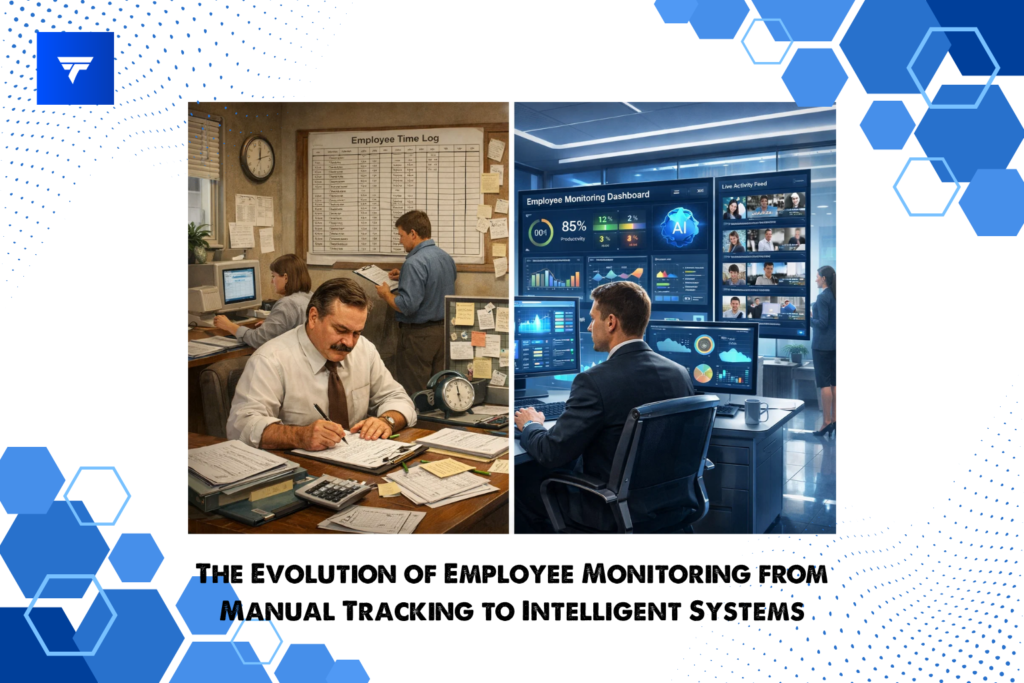
This is exactly why employee monitoring has evolved so much over the years. It is no longer about watching employees. It is about understanding work, improving performance, and making better decisions.
In this guide, I will walk you through how employee monitoring has evolved from basic manual tracking to intelligent systems. More importantly, you will understand how this evolution directly impacts your business performance today.
What Employee Monitoring Really Means Today
Employee monitoring is often misunderstood. Many people think it is only about surveillance.
In reality, modern monitoring systems are designed to:
- Understand work patterns
- Measure productivity
- Improve efficiency
- Support better decision-making
According to Gartner, digital workplace tools that provide visibility into employee activity help organizations improve operational efficiency and decision-making.
So the goal is not control. The goal is clarity.
Phase 1: Manual Tracking Systems
How It Worked
In the early stages, businesses relied on completely manual methods such as:
- Paper timesheets
- Attendance registers
- Supervisor observations
Employees would write down their working hours, and managers would review them at the end of the day or week.
Limitations of Manual Tracking
From experience, this system created more problems than it solved.
Time entries were often inaccurate
There was no visibility into actual work activity
Reporting was slow and error-prone
For example, an employee could report eight hours of work, but there was no way to verify how that time was spent.
Impact on Business Performance
Manual tracking made it difficult to:
- Identify inefficiencies
- Measure productivity accurately
- Make informed decisions
As a result, businesses operated mostly on assumptions.
Phase 2: Digital Time Tracking Tools
The Shift to Software
As businesses adopted computers, tracking systems moved from paper to digital tools.
These systems introduced features like:
- Digital timesheets
- Clock-in and clock-out systems
- Basic reporting
This was a major improvement in terms of record keeping.
What Improved
Data became easier to store and access
Reports could be generated faster
Errors from manual entry were reduced
What Still Did Not Work
Even with digital tools, one major problem remained.
Time tracking does not equal productivity tracking.
An employee could still log eight hours without showing what they actually did during that time.
Phase 3: Activity-Based Monitoring Systems
Deeper Visibility into Work
The next evolution introduced activity tracking.
This included monitoring:
- Application usage
- Website visits
- Active and idle time
This gave businesses a much clearer picture of how work was being done.
Real Benefits
From what I have seen in real implementations, this phase changed how managers understood productivity.
You could now answer questions like:
- Which tools employees use most
- Where time is being wasted
- When productivity drops during the day
New Challenges
However, this level of monitoring also raised concerns.
Employee privacy
Data interpretation
Over-monitoring
According to Harvard Business Review, transparency and trust are critical when implementing monitoring systems. Without them, employee morale can suffer.
Phase 4: Intelligent Workforce Management Systems
What Makes Systems Intelligent
Modern systems go beyond tracking. They analyze and interpret data.
They combine multiple data points such as:
- Time tracking
- Activity monitoring
- Behavior analysis
- Performance trends
Then they convert this into meaningful insights.
Key Capabilities
Intelligent systems provide:
- Real-time dashboards
- Automated reports
- Productivity analytics
- Risk detection
This allows businesses to move from observation to optimization.
Real Impact on Business Performance
This is where the biggest transformation happens.
Instead of asking what happened, you can now understand:
- Why it happened
- How to fix it
- How to prevent it
According to McKinsey & Company, organizations that use advanced analytics improve productivity and decision-making significantly.
How This Evolution Impacts Your Business Today
With intelligent systems, decisions are based on real data, not assumptions.
You can quickly identify:
- Performance gaps
- Inefficient workflows
- Resource allocation issues
When employees know their work is measured fairly and clearly, productivity improves naturally.
Also, managers can remove bottlenecks faster.
For remote teams, visibility is everything.
Modern systems provide that visibility without requiring constant supervision.
You are no longer managing work once. You are improving it continuously.
Data allows you to track progress and refine processes over time.
Real Example from an Online Business
Let’s say you run a dropshipping business.
You have:
- A product research team
- A marketing team
- A customer support team
In a manual system, you rely on updates and reports.
In an intelligent system, you can see:
- How much time research spends finding products
- Which tools marketing uses most
- How efficiently support handles tickets
This changes everything.
You stop guessing and start improving.
Challenges in Modern Monitoring Systems
Privacy and Trust
You need to balance visibility with respect for employees.
Clear communication is essential.
Too Much Data
More data is not always better.
You need systems that simplify insights instead of overwhelming you.
Misuse of Monitoring
Monitoring should improve work, not create pressure.
Used correctly, it supports employees instead of controlling them.
Best Practices for Using Intelligent Monitoring Systems
Focus on Improvement, Not Control
Use data to help your team perform better, not to micromanage them.
Be Transparent
Always explain:
- What is tracked
- Why it matters
- How it benefits everyone
Use Data to Guide Decisions
Combine data insights with real-world context.
Continuously Adapt
Work patterns change. Your system should evolve with them.
Final Step: How TrackForce Helps You Grow Your Business
Understanding the evolution of employee monitoring is important, but applying it is what creates results.
TrackForce is built as a modern intelligent workforce management system that brings all these stages together into one platform.
Based on its system capabilities, it provides a complete solution for monitoring, analysis, and performance improvement.
Complete Workforce Visibility
TrackForce allows you to see:
- Active and idle time
- Application and website usage
- Task engagement patterns
This gives you a clear and accurate view of how work is happening.
Advanced Monitoring Features
The platform includes:
- Screen snapshots and recordings
- File activity tracking
- Search behavior insights
- Application usage logs
These features provide deep insight into work behavior.
Smart Analytics and Reporting
TrackForce transforms data into actionable insights through:
- Daily workload dashboards
- Monthly performance reports
- Productivity analytics
This helps you make faster and better decisions.
Risk Detection
The system identifies potential issues such as:
- Late logins
- Low activity levels
- Missed work hours
This allows early intervention and better control.
Scalable Team Management
With role-based access and centralized control, TrackForce supports:
- Multi-level team management
- Department-level monitoring
- Organization-wide visibility
It works for both small teams and growing businesses.
Conclusion
The evolution of employee monitoring shows a clear shift.
From manual tracking to intelligent systems, the focus has moved from recording time to understanding work.
This transformation allows businesses to:
- Improve productivity
- Make better decisions
- Scale efficiently
If you want to stay competitive in today’s digital environment, adopting intelligent workforce management is no longer optional.
It is the system that turns effort into measurable results and helps you build a business that runs with clarity, not guesswork.
