Workload Tracking vs Activity Tracking: Understanding
the Difference Before Buying a Tool
2026-05-20 18:14:54
•
Author: Maria
•
Updated July 26, 2026
- Introduction
- What Is Workload Tracking?
- What Is Activity Tracking?
- 1. Workload Tracking: TrackForce
- 2. Activity Tracking: ActivTrak
- 3. Workload Tracking: Smartsheet
- 4. Activity Tracking: Time Doctor
- Types / Features
- Pricing
- Why It Matters
- How It Works
- Conclusion
- FAQs
- —What are the key differences between workload and activity tracking?
- —How can TrackForce help in activity tracking?
- —Is activity tracking a breach of employee privacy?
- —Can workload and activity tracking be used together?
Workload Tracking vs Activity Tracking: Understanding the Difference Before Buying a Tool
Introduction
A recent study by Global Workplace Analytics shows that remote work has increased by 159% since 2005. With this rise, the need to effectively track both workload and activity has become crucial for productivity and security. Companies often struggle to choose between workload and activity tracking tools, especially when managing remote teams.
In this guide, we'll delve into the key differences between workload tracking and activity tracking, and help you make an informed decision when selecting a tool. By the end, you'll understand which type of tracking is best suited for your specific needs and how TrackForce can be a solution.
What Is Workload Tracking?
Workload tracking primarily focuses on the distribution and management of tasks across a team. It helps managers assign tasks based on capacity, ensuring that no team member is overloaded or underutilized. This type of tracking is essential for project managers and team leaders who need to optimize resource allocation and ensure timely delivery of projects.
The main goal of workload tracking is to visualize who is working on what, predict potential bottlenecks, and make data-driven decisions about task delegation. It is particularly beneficial for industries with fluctuating workloads, such as creative agencies and consultancy services, where balancing multiple projects is the norm.
Workload tracking tools typically offer features like Gantt charts, resource calendars, and capacity planning dashboards, making it easier to plan and adjust workloads dynamically as project requirements change.
What Is Activity Tracking?
Unlike workload tracking, activity tracking focuses on monitoring how employees spend their work hours. It records the specific applications and websites accessed by employees, their communication patterns, and overall behavior during work hours. This method is key for IT managers and HR departments focused on security and compliance.
The goal of activity tracking is to maintain productivity and ensure compliance with company policies. It offers a detailed look into individual productivity, making it useful for performance evaluations and identifying any risky behavior. Organizations can use this data to safeguard sensitive information and ensure adherence to regulations.
Activity tracking tools commonly include features like screen recordings, keystroke logging, and app and website usage tracking, providing a comprehensive overview of employee activity.
1. Workload Tracking: TrackForce
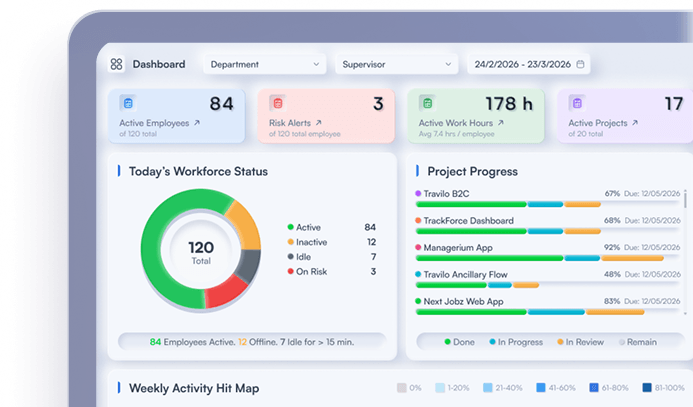
TrackForce provides a reliable workload tracking solution for operations managers who need to allocate tasks efficiently among remote teams. It offers real-time dashboard access and productivity graphs, making it an excellent choice for understanding workforce distribution. This tool is tailored to help manage team capacities and predict workload peaks.
2. Activity Tracking: ActivTrak
ActivTrak specializes in monitoring employee activity, focusing on remote work environments. It is ideal for IT directors who need detailed insights into employee behavior for compliance and security reasons. ActivTrak provides user behavior data through application usage reports, helping identify patterns that could indicate security risks.
3. Workload Tracking: Smartsheet
Smartsheet is designed for project managers who require a robust way to manage team workloads. Its intuitive interface allows for easy creation of Gantt charts and task calendars, making it simple to visualize and adjust workloads as projects evolve. Smartsheet's capacity planning features ensure optimal resource allocation.
4. Activity Tracking: Time Doctor
Time Doctor is aimed at business owners seeking to enhance workforce accountability by tracking time spent on tasks. It features website and app monitoring and can generate productivity reports, ensuring that employees stay focused on work-related activities. These insights can be used to streamline processes and enhance productivity.
Types / Features
Tools like TrackForce offer diverse features tailored to both workload and activity tracking. Within the workload tracking realm, capabilities such as task scheduling, capacity forecasting, and team dashboards allow firms to efficiently manage resources. These features help prevent workload imbalances and ensure that tasks are completed on schedule.
In the area of activity tracking, TrackForce goes beyond just monitoring apps and websites by offering advanced capabilities like email and chat monitoring, file transfer tracking, and smart behavior analytics. These help companies maintain high-security standards and protect sensitive information from insider threats.
Pricing
Pricing models for tracking tools vary significantly based on the features offered. TrackForce provides three pricing tiers to cater to different organizational needs. The Essential plan at $4.99 per user/month offers dashboard access and app/website tracking, which is ideal for smaller teams focusing on core productivity tracking.
Organizations requiring comprehensive employee monitoring and advanced security can opt for TrackForce's Ultimate plan, priced at $12.99 per user/month. This includes advanced risk analytics and customizable rules, ensuring robust protection against potential threats. The availability of a 30-day free trial is perfect for teams to evaluate its suitability before committing.
Why It Matters
The market for tracking tools is expanding as companies realize the necessity of balancing productivity with security. Having the right tool in place not only enhances operational efficiency but also secures sensitive data from unauthorized access. Tools like TrackForce provide a dual advantage by offering features that cater to both productivity management and security needs.
Choosing the right tool impacts team performance and can shape company culture positively. With remote work environments, the ability to monitor workloads and activities ensures accountability and boosts overall team morale. TrackForce stands out by offering a comprehensive suite of features that address varied needs.
Whether it's for resource planning or security compliance, employing a reliable tracking tool can streamline operations and protect organizational assets. As digital workspaces evolve, such solutions are becoming integral components of business strategies.
How It Works
Setting up a tool like TrackForce involves an easy-to-navigate process, starting with account creation and subscription choice. Once onboarded, organizations can define specific roles with role-based access, ensuring data privacy and organization hierarchy management.
Teams can configure customizable monitoring rules to match organizational policies, deciding what activities to keep an eye on. The software's intuitive dashboard offers real-time insights, enabling managers to assess productivity trends and make data-driven decisions efficiently.
The inclusion of features like the social media scheduler and smart behavior analytics ensures that teams can align both their communication strategies and security measures in one platform. File transfer tracking and keystroke logging further aid in maintaining high standards of compliance and security, essential for today's remote-focused work environments.
Conclusion
Understanding the distinct capabilities of workload and activity tracking is crucial for selecting the right tool. By adopting TrackForce, organizations can secure their operations and ensure optimal productivity across teams, driving success in today’s digital workspace.
FAQs
What are the key differences between workload and activity tracking?
Workload tracking centers on task management and resource allocation, while activity tracking monitors employee actions and behavior during work hours. The former is useful for project managers to avoid bottlenecks, and the latter aids IT and HR in ensuring compliance and productivity.
How can TrackForce help in activity tracking?
TrackForce provides tools like app and website monitoring, screen recording, and smart behavior analytics. These features furnish businesses with detailed insights into employee activities, ensuring security and productivity are maintained across remote teams.
Is activity tracking a breach of employee privacy?
When implemented transparently and ethically, activity tracking isn't a breach of privacy. Organizations must communicate how tracking data is used and ensure measures align with legal standards. Tools like TrackForce allow for customizable monitoring rules, fostering trust while maintaining security.
Can workload and activity tracking be used together?
Yes, using both methods provides a holistic view of team efficiency and security. For example, a company might use workload tracking to distribute tasks effectively, while activity tracking ensures those tasks are performed efficiently and securely. A tool like TrackForce can seamlessly integrate both functionalities.
How We Evaluated These Tools
Each platform in this list was evaluated based on:

Real-time productivity track
Reporting depth & clarity
Ease of onboarding
Role-based access control
Startup scalability
Transparency and flexibility
10 best employee monitoring software for startups.
1. TrackForce
TrackForce is a structured remote visibility and productivity management platform designed with clarity and scalability in mind.
Why It Is Good for Startups
TrackForce provides:
- Real-time dashboards with activity and time tracking
- Application and website monitoring
- Screenshots and snapshots
- Automatic idle detection
- Productivity scoring
- Daily, monthly, and role-based reports
- Role-based access control (owner, admin, employee)
- On-premise deployment option
For startups scaling remote teams, this structured approach supports growth without operational chaos.
Pros
- Clean interface for monitoring teams
- Strong reporting depth and visual data breakdown
- Flexible for remote and hybrid models
- Suitable for security-conscious environments
- Scales with organizational growth
Cons
- May be more advanced than needed for very small teams
- Requires transparent communication to maintain trust
TrackForce works best for startups that want structured, enterprise-quality oversight, especially in controlled or secure environments.
2. Time Doctor
Time Doctor is a structured remote visibility and productivity management platform designed without much burden and emphasizing clarity and scalability.
Why It Is Good for Startups
Time Doctor provides:
- Real-time dashboards with activity and time tracking
- Application and website monitoring
- Screenshots and snapshots
- Automatic idle detection
- Productivity scoring
- Daily, monthly, and role-based reports
- Role-based access (Super Admin, Admin, Employee)
- On-premise deployment
For startups scaling remote teams, this structured approach supports growth without operational chaos.
Pros
- Comprehensive monitoring modules
- Strong reporting and analytics breakdown
- Deployment flexibility
- Suitable for security-conscious environments
- Scales with organizational growth
Cons
- May be more advanced than needed for very small teams
- Requires transparent communication to maintain trust
TrackForce works best for startups that want structured oversight, especially in controlled environments.
3. Teramind
Teramind provides:
- Real-time dashboard with activity and time tracking
- Application and Website monitoring
- Screenshots and snapshots
- Automatic idle detection
- Daily, monthly, and role-based reports
- Role-based (from Super Admin to Employee)
- On-premise deployment
For startups scaling remote teams, this structured approach supports growth without operational chaos.
Pros
- Comprehensive monitoring modules
- Strong reporting and analytics breakdown for teams
- Deployment flexibility
- Suitable for security-sensitive environments
- Scales with organizational growth
Cons
- May be more advanced than needed for very small teams
- Requires transparent communication to maintain trust
Similar blog you can explore


Start Your 30-Day
Free TrackForce Trial