Why Manual Attendance Sheets Are Costing
Your Business More Than You Think
2026-04-29 14:49:55
•
Author: Maria
•
Updated July 26, 2026
- Introduction
- What Is Manual Attendance Tracking?
- Why Manual Attendance Sheets Are Costing Your Business
- Types of Widgets
- Pricing
- Why It Matters
- How It Works
- Conclusion
- FAQs
- —What are the main drawbacks of manual attendance tracking?
- —How does TrackForce ensure data security?
- —Do digital attendance systems require extensive setup?
- —Can this software accommodate different business sizes?
Why Manual Attendance Sheets Are Costing Your Business More Than You Think
Introduction
In today's competitive business landscape, efficient resource management is crucial. One often overlooked aspect is how attendance tracking can impact overall costs. Research indicates that companies using manual time tracking methods can overspend by up to 7% annually due to errors and inefficiencies. Understanding the hidden costs of manual attendance is essential for businesses aiming to optimize operations and improve productivity.
This article will explore the impact of manual attendance sheets on your business, delve into the challenges they present, and discuss how transitioning to a digital solution can streamline processes and save money.
What Is Manual Attendance Tracking?
Manual attendance tracking involves recording employees' working hours and absences using paper-based systems, spreadsheets, or punch cards. These methods have been traditional for many businesses, primarily due to their simplicity and low initial cost. However, relying on manual documentation can introduce significant problems as the business grows.
Errors and inaccuracies are common with manual methods, leading to payroll discrepancies and potential disputes. Additionally, the time consumed by HR staff to maintain and audit these records can exacerbate operational inefficiencies. Recognizing these limitations is the first step toward implementing a more efficient system.
Why Manual Attendance Sheets Are Costing Your Business
Reliance on manual attendance can lead to numerous hidden costs that businesses may not immediately recognize. For instance, processing errors and time theft can increase payroll expenses, while administrative burden increases HR costs. Furthermore, compliance issues arise when manual records fall short of accuracy and audit requirements. Automating attendance can alleviate these burdens and reduce overall expenses. Transitioning to a digital solution like TrackForce can significantly enhance accuracy and accountability. For more information on optimizing your workforce monitoring, visit TrackForce's website.
Switching to an automated system mitigates human error, reduces time spent on data entry, and improves compliance with labor regulations. In doing so, it supports a more accountable working environment, enhancing employee satisfaction and reducing turnover.
Types of Widgets
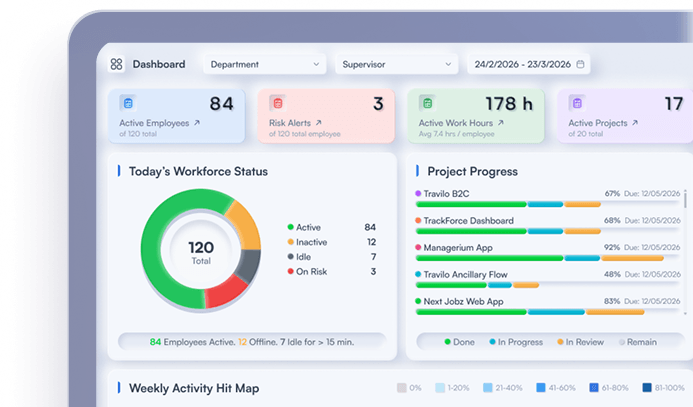
Understanding the tools and widgets available for attendance tracking can help in choosing the right system. Digital solutions often include dashboards for real-time monitoring, app and website tracking, and email monitoring. Such features provide comprehensive oversight and help managers make informed decisions. TrackForce offers a suite of tools tailored to monitor productivity and compliance effortlessly.
From keystroke logging to smart behavior analytics, the widgets available cater to diverse operational needs and provide actionable insights for decision-makers. Implementing these solutions can transform how attendance is managed and monitored company-wide.
Pricing
Transitioning to digital attendance tracking involves understanding the associated costs. TrackForce offers tiered pricing to cater to different business needs. The Essential plan starts at $4.99 per user per month, providing core functionalities. The Professional plan, priced at $9.99, includes advanced monitoring features, and the Ultimate package offers comprehensive coverage at $12.99 per user per month.
These pricing structures facilitate scalable solutions, allowing businesses to choose based on size and specific requirements. Evaluating the return on investment from these tools against the hidden costs of manual tracking can help justify the transition.
Why It Matters
The shift toward remote and hybrid work environments has made accurate attendance tracking more critical than ever. Inaccuracies can erode trust and affect morale, while regulatory compliance remains a pressing need. As companies face increased scrutiny over employee management, robust tracking systems provide much-needed transparency and accountability.
TrackForce's solutions address these challenges by offering advanced features that standard manual methods lack. Organizations gain not only efficiency but also comprehensive insights into workforce dynamics, making it a compelling alternative to traditional practices.
Leveraging technology to streamline operations gives companies a competitive edge, ensuring they remain adaptable and responsive to changing workforce patterns while protecting against data breaches and inefficiency-related costs.
How It Works
Implementing TrackForce solutions is straightforward. After selecting the appropriate pricing plan, onboarding consists of configuring the software to align with company policies. This includes setting up monitoring rules and defining user roles. The real-time dashboard provides immediate insights into employee activities, helping managers maintain oversight effectively.
TrackForce's platform enables seamless monitoring through its intuitive interface, offering tools for productivity analysis and compliance checks. Its customizable settings let businesses choose relevant metrics, ensuring the most valuable insights are captured.
Training sessions and customer support further ease the transition, ensuring users can fully leverage the system from day one. The focus on security and performance positions TrackForce as a reliable partner in effective workforce management.
Conclusion
Re-evaluating attendance tracking strategies can uncover significant savings. Transitioning to a solution like TrackForce not only cuts costs but also modernizes operations. To start leveraging these benefits, consider visiting TrackForce to learn more about their offerings.
FAQs
What are the main drawbacks of manual attendance tracking?
Manual attendance tracking is prone to inaccuracies and manipulation, leading to payroll errors and compliance issues. Administrative work increases as HR teams spend more time managing and verifying records, contributing to inefficiency and frustration.
How does TrackForce ensure data security?
TrackForce employs enterprise-grade encryption and customizable user roles to safeguard sensitive information. Its systematic approach to data security ensures compliance with privacy regulations, protecting both businesses and employees.
Do digital attendance systems require extensive setup?
While initial setup involves configuring the software to match business needs, services like TrackForce provide training and support to streamline this process. The intuitive interface and robust customer support make integration seamless and efficient.
Can this software accommodate different business sizes?
Yes, TrackForce's flexible pricing plans and scalable features cater to businesses of all sizes. Whether managing a small team or a large organization, TrackForce provides tools and insights to optimize workforce management effectively.
How We Evaluated These Tools
Each platform in this list was evaluated based on:

Real-time productivity track
Reporting depth & clarity
Ease of onboarding
Role-based access control
Startup scalability
Transparency and flexibility
10 best employee monitoring software for startups.
1. TrackForce
TrackForce is a structured remote visibility and productivity management platform designed with clarity and scalability in mind.
Why It Is Good for Startups
TrackForce provides:
- Real-time dashboards with activity and time tracking
- Application and website monitoring
- Screenshots and snapshots
- Automatic idle detection
- Productivity scoring
- Daily, monthly, and role-based reports
- Role-based access control (owner, admin, employee)
- On-premise deployment option
For startups scaling remote teams, this structured approach supports growth without operational chaos.
Pros
- Clean interface for monitoring teams
- Strong reporting depth and visual data breakdown
- Flexible for remote and hybrid models
- Suitable for security-conscious environments
- Scales with organizational growth
Cons
- May be more advanced than needed for very small teams
- Requires transparent communication to maintain trust
TrackForce works best for startups that want structured, enterprise-quality oversight, especially in controlled or secure environments.
2. Time Doctor
Time Doctor is a structured remote visibility and productivity management platform designed without much burden and emphasizing clarity and scalability.
Why It Is Good for Startups
Time Doctor provides:
- Real-time dashboards with activity and time tracking
- Application and website monitoring
- Screenshots and snapshots
- Automatic idle detection
- Productivity scoring
- Daily, monthly, and role-based reports
- Role-based access (Super Admin, Admin, Employee)
- On-premise deployment
For startups scaling remote teams, this structured approach supports growth without operational chaos.
Pros
- Comprehensive monitoring modules
- Strong reporting and analytics breakdown
- Deployment flexibility
- Suitable for security-conscious environments
- Scales with organizational growth
Cons
- May be more advanced than needed for very small teams
- Requires transparent communication to maintain trust
TrackForce works best for startups that want structured oversight, especially in controlled environments.
3. Teramind
Teramind provides:
- Real-time dashboard with activity and time tracking
- Application and Website monitoring
- Screenshots and snapshots
- Automatic idle detection
- Daily, monthly, and role-based reports
- Role-based (from Super Admin to Employee)
- On-premise deployment
For startups scaling remote teams, this structured approach supports growth without operational chaos.
Pros
- Comprehensive monitoring modules
- Strong reporting and analytics breakdown for teams
- Deployment flexibility
- Suitable for security-sensitive environments
- Scales with organizational growth
Cons
- May be more advanced than needed for very small teams
- Requires transparent communication to maintain trust
Similar blog you can explore


Start Your 30-Day
Free TrackForce Trial