How Keystroke Monitoring Software Saves
Your Millions of Dollars
2025-11-10 11:09:02
•
Author: Tanveer
•
Updated July 26, 2026
- What Employee Keystroke Monitoring Software Does
- —How Keystroke Data Helps
- —What the Software Records
- —Why Businesses Use It
- Key Features of Keystroke Monitoring Tools
- —Real-Time Tracking
- —Data Encryption and Security
- —Performance Dashboards
- —Integration with Other Features
- Benefits of Using Employee Keystroke Monitoring Software
- —Improved Productivity
- —Better Data Security
- —Clearer Accountability
- —Insightful Reports
- Legal and Ethical Considerations
- —Transparency Matters
- —Follow Regulations
- —Use for Growth, Not Punishment
- Choosing the Right Keystroke Monitoring Tool
- —Focus on Security
- —Look for Flexibility
- —Ease of Use
- —Compatibility
- How Keystroke Monitoring Works in Real Life
- —Remote Teams
- —Compliance-Driven Roles
- —Security Operations
- —HR and Performance Analysis
- Risks and How to Manage Them
- —Privacy Risks
- —Data Breach Risks
- —Misinterpretation of Data
- ROI of Keystroke Monitoring
- —Productivity Gains
- —Time Recovery
- —Cost Efficiency
- Best Practices for Ethical Deployment
- —Inform Employees Early
- —Start Small
- —Review Data Periodically
- —Set Retention Limits
- —Keep Goals Clear
- FAQs
- Conclusion
Employee performance and data security often depend on what happens behind the screen. You might think time tracking alone gives you enough insight, but it doesn’t. That’s where employee keystroke monitoring software makes the difference.
This guide explains what keystroke monitoring is, how it works, its benefits, risks, and how it helps both employers and teams work better.
What Employee Keystroke Monitoring Software Does
Every business wants accurate visibility into how employees use their time. Keystroke monitoring tracks typing activity to understand focus levels, task engagement, and response time. It’s not about spying it’s about improving accountability and workflow clarity.
When used properly, the data helps identify productivity barriers, detect insider risks, and protect confidential information.
How Keystroke Data Helps
Each keystroke tells a story. It shows how active an employee is during work hours, which tools they use most, and how often they switch tasks. The goal is to spot distractions and streamline effort.
What the Software Records
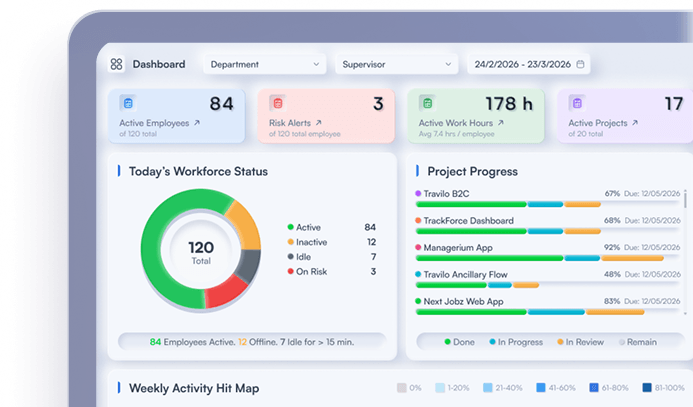
Modern tools like TrackForce record keystrokes, app usage, and browser behavior in real time. They log this data securely and display it on a dashboard that helps managers review work trends quickly.
Why Businesses Use It
Companies use keystroke data to:
- Measure typing activity for remote teams.
- Detect idle time and unproductive habits.
- Identify potential data leaks or insider threats.
- Improve process automation and time reporting.
Key Features of Keystroke Monitoring Tools
Not every monitoring solution works the same way. Strong tools balance visibility with privacy.
Real-Time Tracking
You get instant insights into what’s happening on employee systems. The tool captures keystrokes and screen activity every few seconds.
Data Encryption and Security
Reputable software like TrackForce uses TLS encryption and secure local storage to protect sensitive information. No one outside authorized management can access the collected data.
Performance Dashboards
Interactive dashboards show time spent in apps, websites visited, and keyboard activity patterns. They help you see productivity without micromanagement.
Integration with Other Features
Keystroke monitoring often connects with screenshot capture, file system tracking, and browser history monitoring. Together, they give a 360° view of daily performance.
Benefits of Using Employee Keystroke Monitoring Software
Using this software isn’t just about oversight it’s about creating measurable impact.
Improved Productivity
Employees stay focused when they know their work patterns are visible. Managers can spot workflow gaps and suggest better time management methods.
Better Data Security
Tracking keyboard input can reveal unauthorized file access, password sharing, or unusual activity that signals insider threats.
Clearer Accountability
With real data, performance reviews move from guesswork to facts. Each report shows actual engagement, helping teams discuss performance openly.
Insightful Reports
Automated reports show daily, weekly, and monthly activity patterns. They help managers track growth and identify who might need support or training.
Legal and Ethical Considerations
While monitoring improves efficiency, it raises privacy questions. Businesses must handle this responsibly.
Transparency Matters
Always inform employees before using keystroke tracking. Written consent and clear policies build trust and prevent legal trouble.
Follow Regulations
Comply with laws like GDPR and CCPA. Limit data collection to work-related activities only.
Use for Growth, Not Punishment
Monitoring should never be a weapon. It should be a mirror that helps everyone improve. When used correctly, it creates a culture of fairness and productivity.
Choosing the Right Keystroke Monitoring Tool
Selecting the right software means finding balance visibility without overreach.
Focus on Security
Look for encrypted communication, secure databases, and restricted access to logs. TrackForce, for example, uses TLS/SSL encryption and auto-recovery for data safety.
Look for Flexibility
A good platform lets you adjust tracking intervals, disable high-risk modules like chat or email OCR, and choose which teams to monitor.
Ease of Use
You shouldn’t need IT expertise to understand data. Dashboards should show activity clearly with timestamps and trends.
Compatibility
Ensure the tool supports Windows, macOS, and Linux. TrackForce supports all three, making it suitable for diverse environments.
How Keystroke Monitoring Works in Real Life
Remote Teams
Companies with remote staff use this to confirm active work hours and productivity without manual check-ins.
Compliance-Driven Roles
Industries like finance or healthcare use monitoring to maintain data handling integrity. It ensures sensitive information doesn’t leave the system.
Security Operations
When paired with IDS (Intrusion Detection Systems), keystroke data helps spot suspicious actions before they become breaches.
HR and Performance Analysis
HR teams use productivity metrics from keystrokes and idle time logs to identify workload imbalances or burnout risks.
Risks and How to Manage Them
Privacy Risks
Uncontrolled logging can feel invasive. Avoid features like invisible builds or email content detection unless absolutely necessary.
Data Breach Risks
Store logs securely. Use encrypted channels like HTTPS and access controls.
Misinterpretation of Data
Keystroke count doesn’t equal quality. Always analyze patterns in context with app usage and project type.
TrackForce mitigates these issues by offering transparent controls, legal compliance features, and opt-out options for sensitive roles.
ROI of Keystroke Monitoring
You might ask, does it really pay off? Yes, it does when implemented correctly.
Productivity Gains
Companies report 10–15% improvement in overall productivity within months of rollout.
Time Recovery
Automation helps recover 2–3 work hours per employee weekly.
Cost Efficiency
Even with infrastructure and support costs, ROI is strong. A 100-person team can see annual benefits exceeding half a million dollars.
Best Practices for Ethical Deployment
Inform Employees Early
Provide at least 30 days’ notice before launching monitoring.
Start Small
Begin with a pilot group to test configuration and accuracy.
Review Data Periodically
Analyze logs weekly or monthly, not every hour. Avoid micromanagement.
Set Retention Limits
Delete logs after a set period to protect privacy and comply with data laws.
Keep Goals Clear
Define monitoring goals productivity, compliance, or security and communicate them clearly.
FAQs
1. Is employee keystroke monitoring software legal?
Yes, if used with consent and a clear policy. Always comply with regional privacy laws like GDPR or CCPA.
2. Does it capture passwords or private messages?
Only if misconfigured. Ethical tools like TrackForce exclude personal data and focus on work-related activity.
3. Can employees see their own data?
Some platforms allow self-access dashboards. It helps employees understand and improve their performance.
4. Does it work for remote and hybrid teams?
Yes. The software records typing and app activity across remote systems to verify active work hours.
5. What makes TrackForce different from others?
TrackForce combines real-time tracking, IDS security, encrypted data handling, and customizable privacy options in one system.
Conclusion
Employee keystroke monitoring software helps businesses understand real productivity, prevent data misuse, and maintain compliance. It turns guesswork into measurable insight without overstepping ethical boundaries.
When used transparently, it strengthens both management and employee trust. Productivity rises, risks drop, and teams perform better.
How We Evaluated These Tools
Each platform in this list was evaluated based on:

Real-time productivity track
Reporting depth & clarity
Ease of onboarding
Role-based access control
Startup scalability
Transparency and flexibility
10 best employee monitoring software for startups.
1. TrackForce
TrackForce is a structured remote visibility and productivity management platform designed with clarity and scalability in mind.
Why It Is Good for Startups
TrackForce provides:
- Real-time dashboards with activity and time tracking
- Application and website monitoring
- Screenshots and snapshots
- Automatic idle detection
- Productivity scoring
- Daily, monthly, and role-based reports
- Role-based access control (owner, admin, employee)
- On-premise deployment option
For startups scaling remote teams, this structured approach supports growth without operational chaos.
Pros
- Clean interface for monitoring teams
- Strong reporting depth and visual data breakdown
- Flexible for remote and hybrid models
- Suitable for security-conscious environments
- Scales with organizational growth
Cons
- May be more advanced than needed for very small teams
- Requires transparent communication to maintain trust
TrackForce works best for startups that want structured, enterprise-quality oversight, especially in controlled or secure environments.
2. Time Doctor
Time Doctor is a structured remote visibility and productivity management platform designed without much burden and emphasizing clarity and scalability.
Why It Is Good for Startups
Time Doctor provides:
- Real-time dashboards with activity and time tracking
- Application and website monitoring
- Screenshots and snapshots
- Automatic idle detection
- Productivity scoring
- Daily, monthly, and role-based reports
- Role-based access (Super Admin, Admin, Employee)
- On-premise deployment
For startups scaling remote teams, this structured approach supports growth without operational chaos.
Pros
- Comprehensive monitoring modules
- Strong reporting and analytics breakdown
- Deployment flexibility
- Suitable for security-conscious environments
- Scales with organizational growth
Cons
- May be more advanced than needed for very small teams
- Requires transparent communication to maintain trust
TrackForce works best for startups that want structured oversight, especially in controlled environments.
3. Teramind
Teramind provides:
- Real-time dashboard with activity and time tracking
- Application and Website monitoring
- Screenshots and snapshots
- Automatic idle detection
- Daily, monthly, and role-based reports
- Role-based (from Super Admin to Employee)
- On-premise deployment
For startups scaling remote teams, this structured approach supports growth without operational chaos.
Pros
- Comprehensive monitoring modules
- Strong reporting and analytics breakdown for teams
- Deployment flexibility
- Suitable for security-sensitive environments
- Scales with organizational growth
Cons
- May be more advanced than needed for very small teams
- Requires transparent communication to maintain trust
Similar blog you can explore


Start Your 30-Day
Free TrackForce Trial