Is Keystroke Logging at Work Legal? What Every Manager Should Know Before Installing Monitoring Software
Introduction
In 2023, remote work statistics revealed that over 80% of companies have adopted some form of employee monitoring, sparking significant debate on the ethical and legal boundaries involved. Understanding the intricate details of these practices is vital for businesses seeking to enhance productivity without infringing on employee rights.
This article will outline the key considerations for managers contemplating the use of keystroke logging software. Readers will gain insights into the legal landscape, various widget categories, pricing, and practical setup of monitoring software, helping them make informed decisions aligned with organizational values and compliance requirements.
What Is Keystroke Logging?
Keystroke logging, often referred to as keylogging, is a method used to capture and record each keystroke made on a computer keyboard. This technique is primarily used by employers to monitor employee activity, ensuring productivity and maintaining data security. However, its use raises significant questions about privacy and legality.
Designed for businesses looking to secure their digital environments, keystroke logging provides insights into how employees utilize their work time, identifying potential inefficiencies or unauthorized actions. Understanding this tool is crucial for managers who must strike a balance between oversight and respecting employee privacy.
Is Keystroke Logging Legal? What Every Manager Should Know
The legality of keystroke logging varies significantly across different jurisdictions. In the United States, federal law does not explicitly prohibit the practice, but state laws might impose certain restrictions. For example, some states require informing employees about monitoring to ensure compliance. In the European Union, the General Data Protection Regulation (GDPR) mandates explicit consent from employees, making silent surveillance a risky legal venture.
The complexities of these legal frameworks require managers to be thoroughly informed before implementing monitoring software. For those considering platforms like TrackForce, understanding these laws is crucial to avoid potential legal pitfalls. TrackForce offers customizable monitoring settings that comply with legal standards, making it a viable option within these constraints.
Types of Monitoring Widgets
Employee monitoring software comes with various widgets to track different kinds of activities. The most common include:
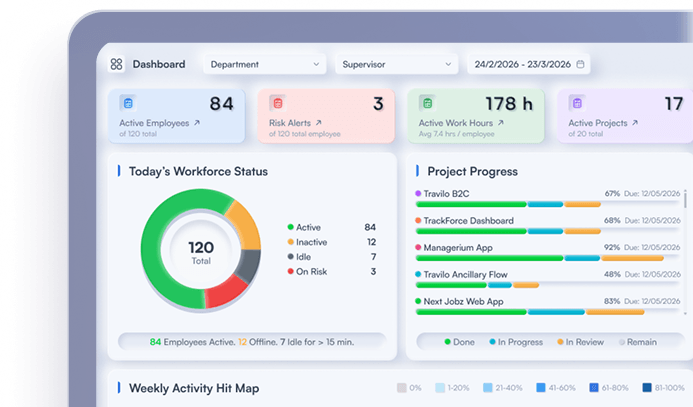
Real-Time Dashboards: These show live tracking data, offering instantaneous insight into employee activities and productivity levels.
App and Website Tracking: This widget monitors the applications and websites accessed during work hours, helping to ensure employees use their time effectively.
For more comprehensive needs, widgets like email and chat monitoring, file transfer tracking, and screen recording can provide deeper insights into employee behavior, aligning with specific organizational requirements. By selecting the right combination of widgets, managers can tailor their monitoring to meet both security and productivity goals.
Pricing
The pricing of keystroke logging and broader employee monitoring software can vary by features and scale. TrackForce offers tiered plans to accommodate different organizational needs. The Essential Plan at $4.99/user/month provides dashboard access, screenshots, and app/website tracking. The Professional Plan at $9.99/user/month includes additional capabilities like file transfer, email, chat monitoring, and screen recording, while the Ultimate Plan at $12.99/user/month offers advanced risk analytics and dedicated account management.
Why It Matters
As remote and hybrid working environments become the norm, the need for transparent monitoring practices has amplified. Businesses are increasingly seeking ways to ensure accountability and productivity without overstepping privacy boundaries. The software landscape today offers tools that are not only versatile but also compliant with varied legal frameworks.
Compared to alternatives, TrackForce stands out with its robust feature set and compliance-centric design. It offers a unified solution for real-time monitoring, behavioral analytics, and security, catering to enterprises aiming to protect both their data and employee trust.
How It Works
Implementing employee monitoring software involves several practical steps. Initially, businesses need to define their monitoring objectives to determine which features align with their goals. Once the requirements are clear, the setup process with companies like TrackForce becomes streamlined, with resources like installation guides and technical support.
Regular training and communication with employees are vital to ensure that monitoring practices are transparent and understood by all involved. By creating a feedback loop, organizations can refine monitoring practices, ensuring they contribute positively to both productivity and workplace morale.
Conclusion
For businesses ready to integrate employee monitoring solutions like keystroke logging, understanding the legal and ethical implications is crucial. Consider the options and explore solutions such as TrackForce to ensure your approach is effective and compliant.
FAQs
Is it mandatory to inform employees about keystroke logging?
Yes, in many jurisdictions, transparency is a legal requirement. Informing employees about monitoring practices ensures compliance with privacy laws and helps to build trust within the organization.
Can keystroke logging prevent data breaches?
While keystroke logging alone won't prevent breaches, it can serve as a component of broader security measures. By tracking unusual typing patterns or unauthorized access attempts, organizations can identify and address potential vulnerabilities.
Is TrackForce suitable for small businesses?
Yes, TrackForce's pricing and feature flexibility make it ideal for businesses of all sizes. Small businesses can start with the Essential Plan, scaling features as their monitoring needs grow.
Are there ethical concerns with keystroke logging?
Ethical concerns primarily revolve around privacy. Companies must balance monitoring with respect for personal boundaries, ensuring transparent policies that are communicated clearly to all employees.