
Employee Monitoring vs Performance Management: Which is More Useful
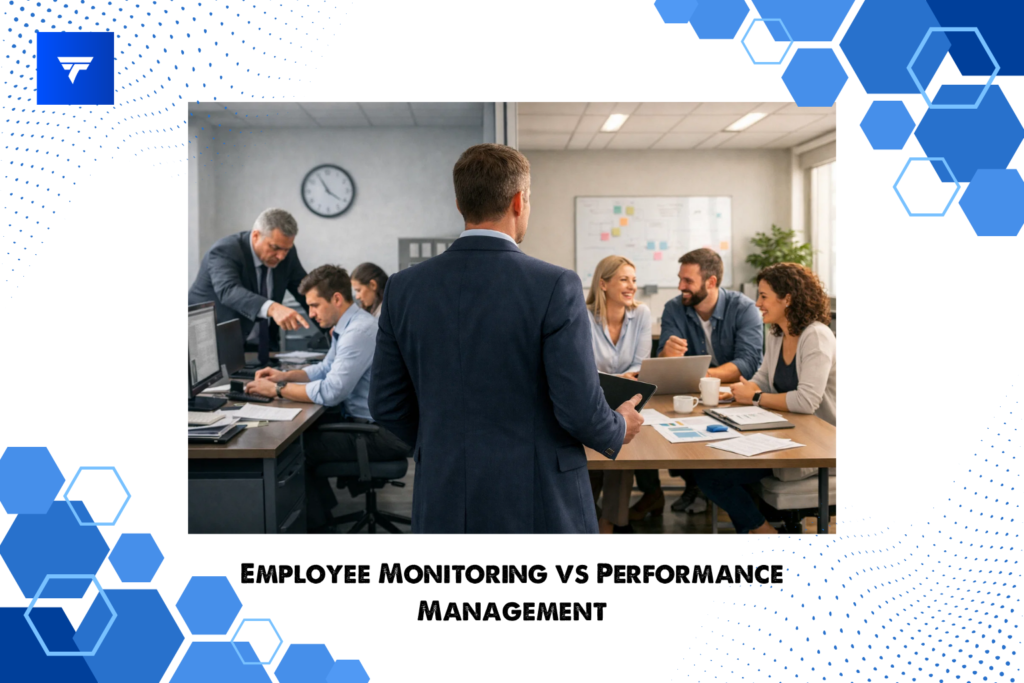
Modern workplaces are evolving fast. Remote work, distributed teams, and digital workflows have made visibility and accountability more complex than ever. As a result, businesses often find themselves choosing between two approaches: employee monitoring and performance management. While they are closely related, they serve different purposes and deliver value in distinct ways.
Understanding how they differ and how they complement each other is essential if you want to build a productive, transparent, and motivated team.
What is Employee Monitoring?
Employee monitoring refers to the process of tracking employee activities during work hours. This can include time tracking, application usage, website visits, task progress, and even screen activity.
At its core, employee monitoring is about visibility. It gives managers a clear, data-backed understanding of how work is being performed on a day-to-day basis.
Modern monitoring tools go beyond simple time logs. They provide detailed insights such as active versus idle time, workload distribution, and behavioral patterns. This allows organizations to identify inefficiencies, detect bottlenecks, and ensure that work hours are being used effectively.
However, monitoring is not just about oversight. When implemented thoughtfully, it creates structure. Employees gain clarity on expectations, and managers gain the ability to make informed decisions instead of relying on assumptions.
What is Performance Management?
Performance management is a broader, more strategic process focused on improving employee output, growth, and alignment with organizational goals.
It includes setting clear objectives, tracking progress, providing feedback, conducting evaluations, and supporting employee development. Unlike monitoring, which focuses on activity, performance management focuses on outcomes.
This approach is deeply human-centric. It emphasizes communication, coaching, and continuous improvement. Managers work closely with employees to identify strengths, address weaknesses, and create pathways for growth.
Effective performance management systems are not just about annual reviews. They are ongoing processes that encourage accountability, engagement, and professional development.
Key Differences: Employee Monitoring vs Performance Management
The most important distinction lies in their purpose.
Employee monitoring is operational. It answers questions like:
What are employees doing right now?
How much time is being spent on tasks?
Where are inefficiencies occurring?
Performance management is strategic. It answers questions like:
Are employees meeting their goals?
How can performance be improved?
What skills need to be developed?
Monitoring focuses on behavior and activity. Performance management focuses on results and growth.
Another key difference is perception. Monitoring can feel intrusive if not handled properly. Performance management, when done well, feels supportive and developmental.
Both are valuable, but they operate at different levels of management.
How Employee Monitoring Supports Performance Management
Rather than viewing these two approaches as competing, it is more useful to see how they work together.
Employee monitoring provides the raw data that performance management relies on. Without accurate data, performance evaluations can become subjective or biased.
For example, monitoring tools can reveal patterns such as:
Consistent delays in task completion
Frequent idle time during peak hours
High engagement with productive applications
These insights allow managers to have more meaningful conversations with employees. Instead of vague feedback, discussions can be grounded in real evidence.
This creates a more objective and transparent performance management process. Employees understand where they stand and what needs to improve.
The Case for Employee Monitoring — Benefits You Can’t Ignore
Employee monitoring offers several practical advantages, especially in modern work environments.
First, it improves accountability. When work is visible, employees are more likely to stay focused and responsible for their tasks.
Second, it enhances productivity. By identifying time-wasting activities and inefficiencies, businesses can optimize workflows and improve output.
Third, it supports remote work. Managers can maintain visibility even when teams are geographically distributed.
Fourth, it simplifies reporting. Automated data collection reduces manual effort and provides accurate insights in real time.
Finally, it helps with risk management. Monitoring can detect unusual behavior, policy violations, or security risks before they escalate.
These benefits make monitoring a powerful operational tool when used responsibly.
The Case for Performance Management — Why It Builds Better Teams
While monitoring improves visibility, performance management builds capability.
It encourages goal alignment. Employees understand how their work contributes to larger objectives.
It fosters growth. Regular feedback and coaching help employees develop skills and improve performance over time.
It boosts engagement. When employees feel supported and recognized, they are more motivated to perform well.
It strengthens relationships. Open communication between managers and employees creates trust and collaboration.
Most importantly, performance management focuses on long-term success. It is not just about what employees are doing today, but how they can improve tomorrow.
The Psychological Impact of Monitoring on Employee Morale
Employee monitoring can have both positive and negative psychological effects, depending on how it is implemented.
On the positive side, it can create clarity. Employees know what is expected of them and how their performance is measured.
On the negative side, excessive or hidden monitoring can lead to stress, anxiety, and distrust. Employees may feel that they are constantly being watched, which can reduce creativity and morale.
The key is transparency. When employees understand why monitoring is being used and how it benefits them, they are more likely to accept it.
Communication plays a crucial role. Organizations must clearly explain policies, set boundaries, and ensure that monitoring is used ethically.
Legal and Ethical Considerations You Need to Know
Employee monitoring is subject to legal and ethical constraints that vary by region.
From a legal perspective, businesses must ensure compliance with data protection and privacy laws. This often includes informing employees about monitoring practices and obtaining consent where required.
From an ethical perspective, the focus should be on fairness and respect. Monitoring should not invade personal privacy or create a culture of surveillance.
Organizations should establish clear policies that define:
What is being monitored
Why it is being monitored
How the data will be used
Balancing business needs with employee rights is essential for maintaining trust and avoiding potential conflicts.
Employee Monitoring vs Performance Management: When Should You Use Them?
Choosing between these approaches depends on your specific goals and challenges.
Use Employee Monitoring When:
You need real-time visibility into daily operations
Your team works remotely or across multiple locations
You want to identify inefficiencies and optimize workflows
You need accurate data for reporting and analysis
You are managing large teams where manual oversight is difficult
Use Performance Management When:
You want to improve employee skills and capabilities
You are focused on long-term growth and development
You need to align individual goals with business objectives
You want to increase engagement and motivation
You are building a culture of continuous improvement
In most cases, the best approach is not choosing one over the other, but combining both strategically.
How to Balance Monitoring Data With Performance Management for a Successful Team
The real value emerges when monitoring data is used to enhance performance management, not replace it.
Start by using monitoring insights as a foundation. Identify trends and patterns in employee behavior.
Then, translate those insights into meaningful actions. Provide feedback, set goals, and offer support based on the data.
Avoid micromanagement. Focus on outcomes rather than obsessing over every detail of activity.
Encourage open dialogue. Allow employees to share their perspective and contribute to solutions.
This balanced approach ensures that data is used constructively, not punitively.
Tools and Technologies: What’s Worth Your Investment?
Investing in the right tools can make a significant difference.
Look for solutions that combine monitoring and performance insights in a single platform. Features such as time tracking, activity analysis, reporting dashboards, and employee analytics are particularly valuable.
Ease of use is important. A complex system can create friction and reduce adoption.
Scalability matters as well. Choose tools that can grow with your organization.
Most importantly, prioritize tools that focus on transparency and user experience. Technology should support your team, not overwhelm it.
Best Practices for Implementing Both in Your Workplace
Start with clear objectives. Define what you want to achieve with monitoring and performance management.
Be transparent. Communicate openly with employees about policies and expectations.
Use data responsibly. Focus on improvement rather than punishment.
Provide training. Help managers and employees understand how to use tools effectively.
Review regularly. Continuously evaluate your approach and make adjustments as needed.
Create a feedback loop. Encourage employees to share their thoughts and experiences.
These practices help ensure that both systems work together harmoniously.
Frequently Asked Questions
What is the difference between performance management and performance monitoring?
Performance monitoring focuses on tracking activities and metrics, while performance management is a broader process that includes goal setting, feedback, and development. Monitoring provides data, while management uses that data to drive improvement.
What is the relationship between executing, monitoring, and controlling in business management?
Execution involves carrying out tasks. Monitoring tracks progress and performance during execution. Controlling ensures that activities align with goals by making adjustments when necessary. Together, they form a continuous management cycle.
What are the types of performance management systems?
Common types include traditional annual review systems, continuous performance management systems, competency-based systems, and goal-based frameworks such as OKRs. Each approach varies in structure and frequency.
Which metrics do you use for monitoring project management?
Typical metrics include task completion rates, time spent on tasks, resource utilization, deadline adherence, and productivity levels. These metrics provide insight into both efficiency and effectiveness.
Is employee monitoring legal?
In most cases, employee monitoring is legal, but it depends on local laws and regulations. Employers are generally required to inform employees and ensure that monitoring does not violate privacy rights.
What are the risks of over-monitoring employees?
Over-monitoring can lead to decreased morale, increased stress, reduced trust, and lower creativity. It can also create a culture of surveillance, which may harm long-term productivity.
How do you build a performance management framework from scratch?
Start by defining clear goals and objectives. Establish measurable metrics. Implement regular feedback cycles. Use data to guide decisions. Provide training and support. Continuously review and refine the system.
Final Step: How TrackForce Helps You Grow Your Online Business
Managing a growing business requires more than guesswork. You need clarity, efficiency, and reliable data to make the right decisions.
TrackForce brings employee monitoring and performance management together in a practical, balanced way. It provides real-time visibility into employee activity while also delivering meaningful insights that support performance improvement.
With features like time tracking, activity monitoring, and detailed reports, you can understand how work is actually happening across your team. At the same time, analytics dashboards help you identify trends, measure productivity, and make informed decisions.
The platform is designed to reduce manual work through automated reporting, allowing you to focus on strategy rather than administration. Whether you are managing remote teams or scaling operations, it ensures that everyone stays aligned and accountable.
Most importantly, TrackForce supports a transparent and structured work environment. Employees gain clarity on expectations, while managers gain the tools to guide performance effectively.
This balance is what drives sustainable growth. Not just working harder, but working smarter with the right insights at the right time.
